22K
Posts
15K
Followers
The latest Quad Cities news, weather and sports from Local 4 WHBF on https://OurQuadCities.com.
It’s brain-eating amoeba season. Here’s how to protect yourself
By Addy Bink,
24 days ago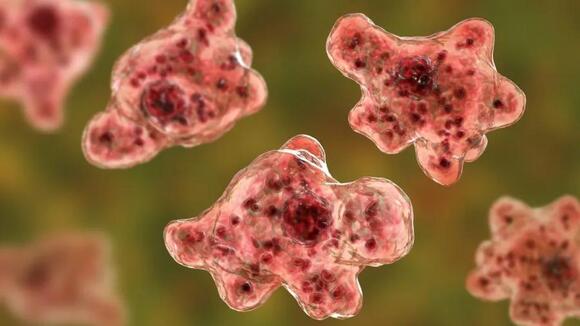
(NEXSTAR) – Temperatures are heating up, which may be driving you to seek out any swimming hole or lake that can help you cool off. Unfortunately, you aren’t the only one spending time in that freshwater.
Naegleria fowleri is an amoeba that thrives in the summer months, especially in warm, still freshwater. It has, “in very rare cases,” also been detected in “poorly maintained swimming pools, splash pads, and other recreational venues,” and tap water, according to the CDC. A recent study reported that the amoeba has also been found in bodies of water at multiple national parks.
The warming climate is only expected to exacerbate the problem, experts warn.
Woman dies from brain-eating amoeba after using tap water to clear sinuses: CDCNow, you may be wondering why an increasing prevalence of an amoeba is such a concern. For humans, it’s because of Naegleria fowleri’s more common name: brain-eating amoeba.
Compared to, say, tick-borne illnesses, there are very, very few cases of brain-eating amoeba infections reported each summer. However, it is almost always fatal.
What makes brain-eating amoeba fatal
When infected water enters your nose and gets to your brain, it can cause primary amebic meningoencephalitis, or PAM. Fewer than 10 people in the U.S. typically get the infection, which targets the central nervous system, each year, per the CDC.
There were 167 PAM cases reported between 1962 and 2024, the CDC explains. Only four of those people did not die.
PAM and its symptoms can occur rapidly. Early signs of PAM, which can be severe and present two to 15 days after exposure, include a high fever, a painful headache, nausea, vomiting, and trembling, according to the Cleveland Clinic. Someone who is infected can also experience a stiff neck, light sensitivity and mental confusion.
An airport is being renamed for Trump. How many US airports are named for presidents?In as little as a day after symptoms begin, a person with PAM can die, the CDC says. Cases often culminate in a coma and death after five days.
An antifungal, amphotericin B, has been used to treat PAM, though the Cleveland Clinic notes that it was a combination of drugs — rifampin, fluconazole, and miltefosine, in addition to amphotericin B — that was used to treat some who survived PAM. Early diagnosis and “cooling the body to below-normal temperature to treat brain swelling” are also credited with helping to treat survivors.
“Young boys” are considered the group most often infected, according to the CDC.
How to avoid brain-eating amoeba
You don’t necessarily have to avoid swimming in freshwater ever again, unless that water is known to have or likely has Naegleria fowleri. Instead, health experts recommend using nose plugs, a nose clip, or holding your nose when swimming, wading, or doing watersports in still, warm freshwater. The brain-eating amoeba enters your body through your nose, not through swallowing the water.
In hot springs, the CDC recommends keeping your head above water. In shallow water, avoid digging, as the amoeba may be living in that material.
Rare Lyme disease-causing strain with ties to Wisconsin spreads to new state: What to knowYour exposure risk isn’t limited to swimming, either.
Some have become infected and died after using contaminated tap water to clean their nasal passages. It’s recommended that you use distilled or sterilized water, or tap water that has been boiled and cooled. The Cleveland Clinic says you can also use chlorine bleach to disinfect water for nasal use.
If you develop a fever or headache after being in warm freshwater or using tap water in a neti pot, the Cleveland Clinic encourages speaking to your healthcare provider or going to the emergency room right away.
“Early diagnosis and treatment of infection with brain-eating amoeba is critical,” the healthcare company says.
Copyright 2026 Nexstar Media, Inc. All rights reserved. This material may not be published, broadcast, rewritten, or redistributed.For the latest news, weather, sports, and streaming video, head to WHBF - OurQuadCities.com.
Comments
NC Cyclosporiasis Cases Top 700 in Surge
Colorado is seeing an increase in salmonella cases. Here’s what you should know.
North Carolina reports over 700 cyclosporiasis cases and introduces a tracking dashboard.
YOU MAY ALSO LIKE
CJ Coombs
Missing since 2009 from a home of chaos: 5-year-old Haleigh Ann-Marie Cummings in Satsuma, Florida
Haleigh Ann Marie Cummings has been missing from Satsuma, Florida (Putnam County), since February 10, 2009, according to the National Center for Missing and Exploited Children (NCMEC). Haleigh's photo shows age-progression to 21 years, though she would now be 22 if alive.
Edmond Thorne
Miami's Trump Tower 3 Is Sinking — Owners Pay While Everyone Else Skips Away Free
A new study says the luxury tower is among dozens of coastal buildings settling into South Florida soil, raising hard questions about what buyers were told, what engineers knew, and who pays when the ground keeps moving.
CJ Coombs
The latest Quad Cities news, weather and sports from Local 4 WHBF on https://OurQuadCities.com.
22.3K
Posts
15.4K
Followers